
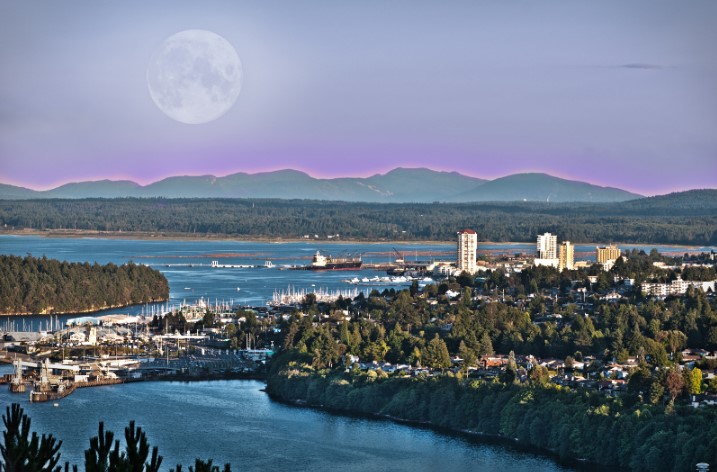



When British Columbians think about the Island, they might think about small beach towns,
forestry and mining communities, and fisheries off the coast. These industries are certainly part
of the Island’s economy. But they are not the whole – and they have not been for a long time.
Today, the Island is home to both resource industries and a diversified industrial base: tech
firms, advanced manufacturing firms, a value-added wood manufacturing sector, and a growing
service sector.
In a year where Canada is looking abroad to diversify its markets and strengthen its export
performance, the Island is strategically positioned. Its deep sea ports, ferry terminals, airports,
and its wealth of industrial land are ready to help the country move forward and build itself up.
In 2026, the Island is facing challenges. But there are also opportunities to be seized. If the
public and private sectors can collaborate and invest in the things that matter – in productivity, in
infrastructure and in people – and more prosperous future lies ahead for Islanders and all British
Columbians.
A part of a whole
Vancouver Island is part of British Columbia, and its economy has not been able to escape the
macro trends that affect the rest of the province.
Since the end of the COVID-19 pandemic, the Island, like British Columbia (BC), has been in a
slow growth environment, with sluggish private sector investment. The main driver of economic
growth was population growth, with people relocating from other parts of BC and the rest of
Canada. Population growth has slowed considerably following federal immigration reforms, and
low productivity has led to lower growth and lower dynamism.
There has been growth in public sector employment. Between 2021 and 2025, the Island added
almost 30,000 public sector jobs, compared to around 12,000 private sector jobs. This trend
mirrors a greater trend in BC, which has seen a similar divergence between the private and
public sectors.
Public sector jobs are welcome – and they are frequently growth-enabling. Public sector workers
include teachers who train the workers of the future, nurses and doctors who keep them healthy,
and engineering and maintenance workers who keep roads smooth and clear so goods and
people can move. But ultimately, growth on Vancouver Island must be driven by the private
sector, which can help attract investment, improve efficiency, bolster productivity, and find new
markets for our goods.
Like other parts of Canada, the Island also has an aging population, which has knock-on effects
on the number of available workers. Between 2016 and 2024, the share of the population
between 15 and 65 shrank by about 4 per cent, while the share of the population over 65 grew
by about the same amount. And that working age population is carrying a greater and greater
economic burden. While the labour force participation of working age Islanders (those between
25 and 54) actually increased between 2021 and 2026 (from 87 to 88 per cent), the participation
rate of Islanders over the age of 55 declined (from 38 per cent to 36 per cent), and the
participation rate of Islanders between 15 and 25 dropped precipitously (65% and 62%).
The Island has not been able to escape these macro trends. They certainly bring challenges: in
past, economic growth has been driven by new residents, their spending power, and an
increase in demand for the things they need.
Population growth has levelled off, and the existing population is aging. Future economic growth
will mean identifying the needs that this population will have in the future, and in increasing the
amount of value generated per worker by boosting productivity.
As the Island’s population ages, demand for healthcare and health-related services will soar.
Investment in public healthcare services can meet part of this demand. But the private sector
can meet another part – and therein lies opportunity.
BC has already seen the proliferation of innovative telehealth services, whereby medical and
paramedical care can be provided to people who live in communities where there are healthcare
provider shortages. These services can both serve the local population and create a lucrative
export sector.
A diversified base
Vancouver Island has traditionally been associated with resource-based industries like forestry.
Forestry is in long-term decline – overall softwood lumber exports are down year-over-year
(forest products are down 2 per cent and logs are down 7 per cent), and the ailing sector has
been hit by American tariffs imposed as part of a long-standing dispute with the United States.
But while those sectors continue to make up part of the Island’s economy, they are not the main
drivers of growth and employment, and have not been for a long time. Agriculture, forestry,
hunting and fishing together employ about 5,000 Islanders, compared to 18,000 employed in the
value-added manufacturing sector and 40,000 in the construction sector.
Of the stereotypical Island industries, tourism is a standout. Travel is up year over year, and
businesses are prospering. Between 2024 and 2025, the daily room rate in Victoria was up to
$289 from $259, and hotel occupancy rose six percentage points to 80.6%. 2026 looks to be
another strong year, with vehicle and passenger traffic between the Island and the Mainland
following typical seasonal patterns, but high fuel prices pose a risk to the success of this year’s
travel season.
Opportunities ahead
The Island has challenges. But there are also opportunities – to build the infrastructure that
strengthens local economies and national sovereignty, and improve Canada’s access to
markets abroad.
We have seen a substantial public investment in Canadian defence through federal upgrades at
CFB Esquimalt and CFB Comox. With these investments comes a substantial complement of
jobs created – but also growth in the Island’s shipbuilding industry.
There are also infrastructure opportunities that beckon in the private sector.
While Metro Vancouver has been called Canada’s Pacific Gateway, the persistent shortage of
industrial land in the cities that surround the Port of Vancouver are a risk to the growth of
Canadian exports.
The Island does not suffer from this problem. Where other regions suffer from shortages,
Vancouver Island offers opportunities to build and invest in the infrastructure that builds Canada
up.
Decades of resource activity have left the Island dotted with towns on the coast with deep water
access, a significant amount of under-utilized industrial land, and established social license for
industrial activity. And far from being isolated, these communities are connected to the rest of
North America – they all have access to short sea shipping to CN Rail’s terminus on the Fraser
River.
Metro Vancouver might be short of warehouses, and its congestion may pose an economic risk,
but the Island’s communities would welcome the opportunity to be part of Canada’s economic
diversification.
Economic growth has slowed on Vancouver Island – but there are opportunities to grow. The
degree to which the Island can seize these opportunities will depend on how effectively the
Island’s governments and businesses can work together.
If the public and private sector can work together – if they can attract investment into people and
their skills, into the productivity of the Island’s businesses, and in the infrastructure that moves
goods to market – a brighter, stronger and more prosperous future is ahead.